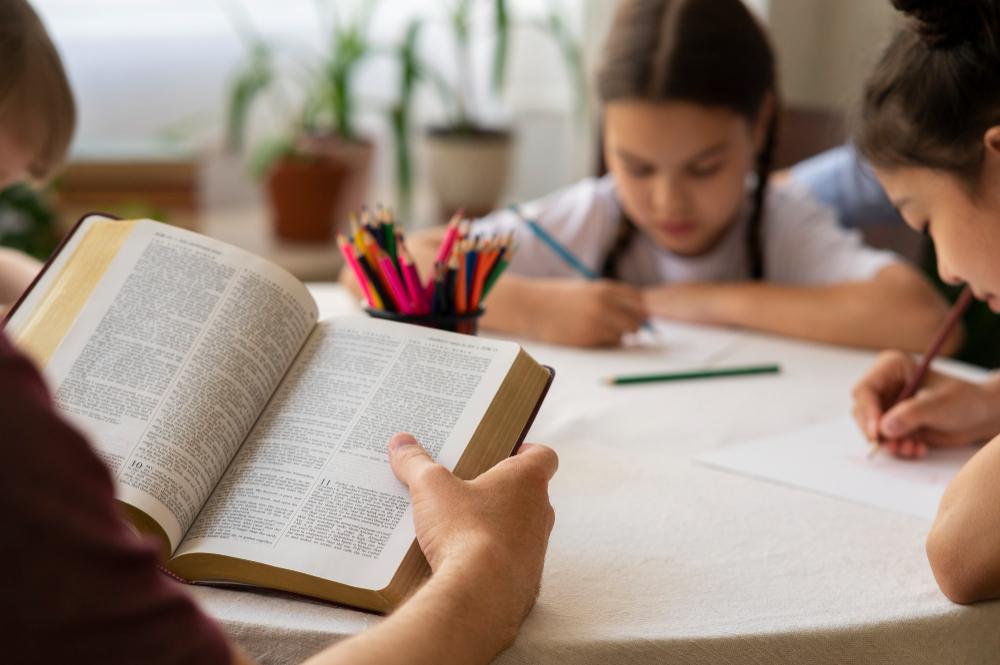
 Choosing the right school for your child is one of the most significant decisions you'll make as a parent. Wayne County offers diverse educational options, each with unique strengths.
The educational landscape includes:
- Faith-based schools (Catholic, Lutheran, non-denominational Christian)
- Independent college preparatory schools
- Specialized academies with specific educational philosophies
- Montessori and other alternative approaches
Navigating Private School Options in Wayne County
For Christian families, finding a school that provides both academic excellence and authentic faith integration can feel challenging. You want an environment that reinforces your values while preparing your child for future success.
At St. Paul School, we understand this journey and have guided hundreds of Wayne County families through the selection process.
Essential Factors to Consider When Evaluating Private Schools
Academic Excellence and Approach
When evaluating academic programs, consider:
✓ Curriculum comprehensiveness
- Does the school offer well-rounded education including core subjects, arts, and enrichment?
- Are there opportunities for both breadth and depth of learning?
- How is technology integrated into learning?
✓ Teaching methodology
- Is there a balance between teacher-directed and student-centered learning?
- How are critical thinking and problem-solving developed?
- What instructional approaches are used for different subjects?
✓ Differentiation practices
- How does the school accommodate different learning styles?
- What supports exist for struggling learners?
- How are advanced learners challenged appropriately?
✓ Educational outcomes
- What are the school's standardized test scores?
- Where do graduates attend high school and how do they perform?
- What skills and habits do students develop?
Research indicates that effective schools maintain high expectations while providing appropriate support (National Association of Independent Schools, 2021).
To evaluate St. Paul's academic program, visit our curriculum page or schedule a classroom observation.
Faith Integration and Values Alignment
For Christian families, consider these spiritual aspects:
✓ Biblical foundation
- How is Scripture integrated into both religious instruction and general curriculum?
- What Bible curriculum is used and how is it taught?
- How are biblical principles applied to all subject areas?
✓ Spiritual formation practices
- Beyond Bible classes, how is spiritual growth nurtured?
- What prayer, worship, and service opportunities exist?
- How are Christian virtues and character developed?
✓ Faculty faith commitment
- Are teachers practicing Christians who serve as spiritual mentors?
- How are they equipped to integrate faith and learning?
- Do they model authentic Christian living?
✓ Denominational perspective
- Is the school affiliated with a specific denomination?
- How might its theological emphasis compare with your family's beliefs?
- Are students from various Christian traditions welcomed?
Studies show that consistency between home and school values significantly impacts educational effectiveness.
At St. Paul, we encourage prospective families to review our statement of faith and discuss any theological questions with our administration.
Community and Culture
School culture significantly impacts your child's experience:
✓ School size and classroom ratios
- What is the typical class size?
- What is the overall school enrollment?
- What is the student-teacher ratio?
✓ Discipline philosophy
- How are behavior expectations communicated and enforced?
- Is the approach punitive or restorative?
- How are conflicts between students handled?
✓ Parent involvement
- What opportunities exist for parent partnership?
- How does the school communicate with families?
- Are parents welcomed in the classroom?
✓ Diversity and inclusion
- Does the student body reflect diverse backgrounds?
- How are differences respected within a Christian framework?
- How are students prepared for a diverse world?
✓ Extracurricular offerings
- What activities are available beyond academics?
- How are students' varied interests and talents developed?
- Are there opportunities for leadership development?
Research consistently shows that positive school culture correlates strongly with student achievement and well-being (Thapa et al., 2013).
Making Education Affordable: Understanding Financial Aid Options
Many families assume private education is financially out of reach. Most private schools in Wayne County, including St. Paul, offer various forms of financial assistance.
Types of financial support include:
|
Type of Aid |
Description |
Typical Requirements |
|
Need-based financial aid |
Tuition assistance based on family financial circumstances |
Financial information submission, application |
|
Merit scholarships |
Awards for outstanding academic, artistic, or leadership abilities |
Testing, auditions, or demonstrations of ability |
|
Multi-child discounts |
Reduced tuition for families enrolling more than one child |
Enrollment of multiple children |
|
Flexible payment plans |
Options to spread tuition costs throughout the year |
Enrollment commitment, automated payments |
Don't let concerns about affordability prevent you from exploring options. Many schools are committed to making their programs accessible to families from diverse economic backgrounds.
For specific information about tuition and financial aid at St. Paul School, please visit our tuition and fees schedule page.
The St. Paul School Difference in Wayne County
Our approach is characterized by:
✓ Rigorous academics within a biblical worldview
- Curriculum exceeding state standards
- Christian perspectives integrated across subjects
- Critical thinking development in all areas
✓ Nurturing community
- Average class size of 18 students
- Personal attention balanced with peer diversity
- Strong partnership with parents
✓ Whole-child development
- Intellectual, spiritual, physical, and social-emotional growth
- Character development integrated throughout the day
- Recognition of each child's unique gifts and needs
✓ Experienced, dedicated faculty
- Teachers average 12+ years of experience
- 85% hold advanced degrees
- Ongoing professional development
✓ Easily accessible location
- Centrally located to serve families throughout Wayne County
- Accessible from Livonia, Plymouth, Canton, Northville, and surrounding areas
- Part of the vibrant Northville community
Our graduate outcomes demonstrate the effectiveness of this approach, with alumni thriving in top high schools while maintaining strong faith foundations.
The Value of School Tours and Shadow Days
While research and recommendations are valuable, nothing replaces experiencing a school firsthand.
During a school tour, you'll observe:
- Classroom dynamics and teaching in action
- Student-teacher interactions
- Physical environment and resources
- Overall atmosphere and energy
Shadow days allow your child to:
- Experience a typical school day firsthand
- Interact with potential peers and teachers
- Test whether the school "feels right"
- Ask questions from a student perspective
Research shows that school visits significantly impact school choice decisions, often confirming or changing initial impressions (Goldring & Phillips, 2008).
Steps to Finding Your Perfect School Match
Finding the right school requires a systematic approach:
1. Clarify your priorities
Before researching schools, discuss as a family what factors matter most:
- Academic rigor?
- Faith formation?
- Proximity to home?
- Specific programs or approaches?
- Community and culture?
2. Research thoroughly
- Visit school websites
- Read reviews and testimonials
- Talk to current families
- Consult educational consultants if needed
3. Schedule tours at your top choices
- Bring a list of specific questions
- Observe classrooms in action
- Talk with administrators and teachers
- Note your instinctive response to the environment
4. Involve your child appropriately
- Consider their age and maturity
- Seek their input after visits
- Discuss how each option might meet their needs
- Balance their preferences with your parental wisdom
5. Consider a shadow day
- Arrange for your child to spend a day at top-choice schools
- Debrief thoroughly afterward
- Ask specific questions about their experience
- Consider both academic and social aspects
6. Reflect and pray
- Take time to process all information
- Consider which environment seems best suited to your child
- Seek wisdom through prayer and counsel
- Trust your knowledge of your child's unique needs
Throughout this process, remember that no school is perfect, but the right school will align with your values while supporting your child's growth.
The Transition Process: Supporting Your Child Through Change
Whether you're transitioning from public school, homeschooling, or another private school, changing educational environments represents a significant adjustment for children.
Research shows successful transitions include several key elements:
✓ Preparation
- Discussing the change openly before it happens
- Addressing concerns and questions honestly
- Visiting the new school multiple times if possible
- Connecting with future classmates in advance when feasible
✓ Orientation
- Attending formal orientation events
- Meeting teachers before school begins
- Learning routines and expectations in advance
- Becoming familiar with the physical environment
✓ Connection
- Establishing relationships with peers
- Building rapport with teachers
- Connecting with a "buddy" or mentor student
- Joining extracurricular activities to build friendships
✓ Continuity
- Maintaining stable home routines during the transition
- Continuing involvement in outside activities when possible
- Preserving important relationships from the previous school
- Acknowledging what remains the same amid changes
✓ Communication
- Maintaining open dialogue with your child
- Staying in close contact with teachers
- Addressing concerns quickly as they arise
- Celebrating successes and progress
For more information about supporting educational transitions, see our blog article: Adapting to New Routines: A Christian Perspective on School Transitions.
Frequently Asked Questions
When should we begin the private school search process?
Ideal timeline: Start researching schools the year before you plan to enroll.
- For kindergarten: Begin in fall/winter before kindergarten year
- For transfer students: Start 6-8 months before planned transition
Many private schools have application deadlines in January or February for the following academic year, with some popular programs filling earlier.
Are scholarships or financial aid available at private schools in Wayne County?
Yes. Many private schools, including St. Paul, offer:
- Need-based financial assistance
- Merit scholarships
- Multi-child discounts
- Payment plans
Financial aid availability varies between schools. We encourage families to apply for aid at multiple schools to compare offers before making a final decision.
How can we determine if a school will meet our child's specific learning needs?
Be transparent with schools about any diagnosed learning differences or areas of concern.
- Ask about support services and differentiation practices
- Inquire about teacher experience with similar learners
- Speak directly with the school's resource teacher or specialist
- Request specific examples of how they've supported similar students
Different schools have varying levels of support for diverse learners. Some maintain inclusive classrooms with integrated support, while others offer pull-out programs or specialized instruction.
What questions should we ask during a school tour?
Beyond curriculum and programs, consider asking:
- How are conflicts between students handled?
- What does a typical day look like?
- How are parents kept informed about student progress?
- What are the school's greatest strengths and challenges?
- How is technology used in the classroom?
- What makes your school distinct from other options?
How important is accreditation when evaluating private schools?
Accreditation provides assurance that a school meets established standards for educational quality.
While not all excellent schools are accredited, accreditation through organizations like ACSI (Association of Christian Schools International) or ISACS (Independent Schools Association of the Central States) demonstrates commitment to external accountability.
Accredited schools undergo regular review processes that evaluate all aspects of their programs, from curriculum and instruction to facilities and governance.
Can we switch schools if our first choice doesn't work out?
Yes, though mid-year transfers can be challenging. Most private schools will consider mid-year applications if space is available.
If considering a mid-year transfer:
- Communicate openly with both current and potential schools
- Consider timing carefully (natural breaks like semester changes are easier)
- Prepare your child thoroughly for the transition
- Ensure appropriate records transfer between schools
Most educators prioritize children's well-being and will work cooperatively to support a smooth transition when it's in a student's best interest.
Experience St. Paul School for Yourself
While information is valuable, there's no substitute for experiencing our school firsthand. We invite Wayne County families to schedule a personal tour to see our Christ-centered learning community in action.
During your visit, you'll have the opportunity to:
- Observe teachers and students engaged in authentic learning
- Learn about our approach to integrating faith and academic excellence
- Ask questions specific to your child's needs and interests
- Experience the warm community atmosphere that sets St. Paul apart
Ready to take the next step? Schedule Your Personal Tour today or call (248) 349-3146 to speak with our admissions team.
For families interested in learning more about the distinctives of Christian education, please visit our page on Why Choose Christian Education.
Contact Information
St. Paul School 201 Elm Street Northville, MI 48167
Phone: (248) 349-3146
"For I know the plans I have for you," declares the LORD, "plans to prosper you and not to harm you, plans to give you hope and a future." — Jeremiah 29:11